

Part 2 of 9 · Article Series
Secrets of the Sword
This article is part of our 9-part series on the techniques of the sword in the Internal Arts.
Parts are being released weekly so check back regularly to read the latest instalment.
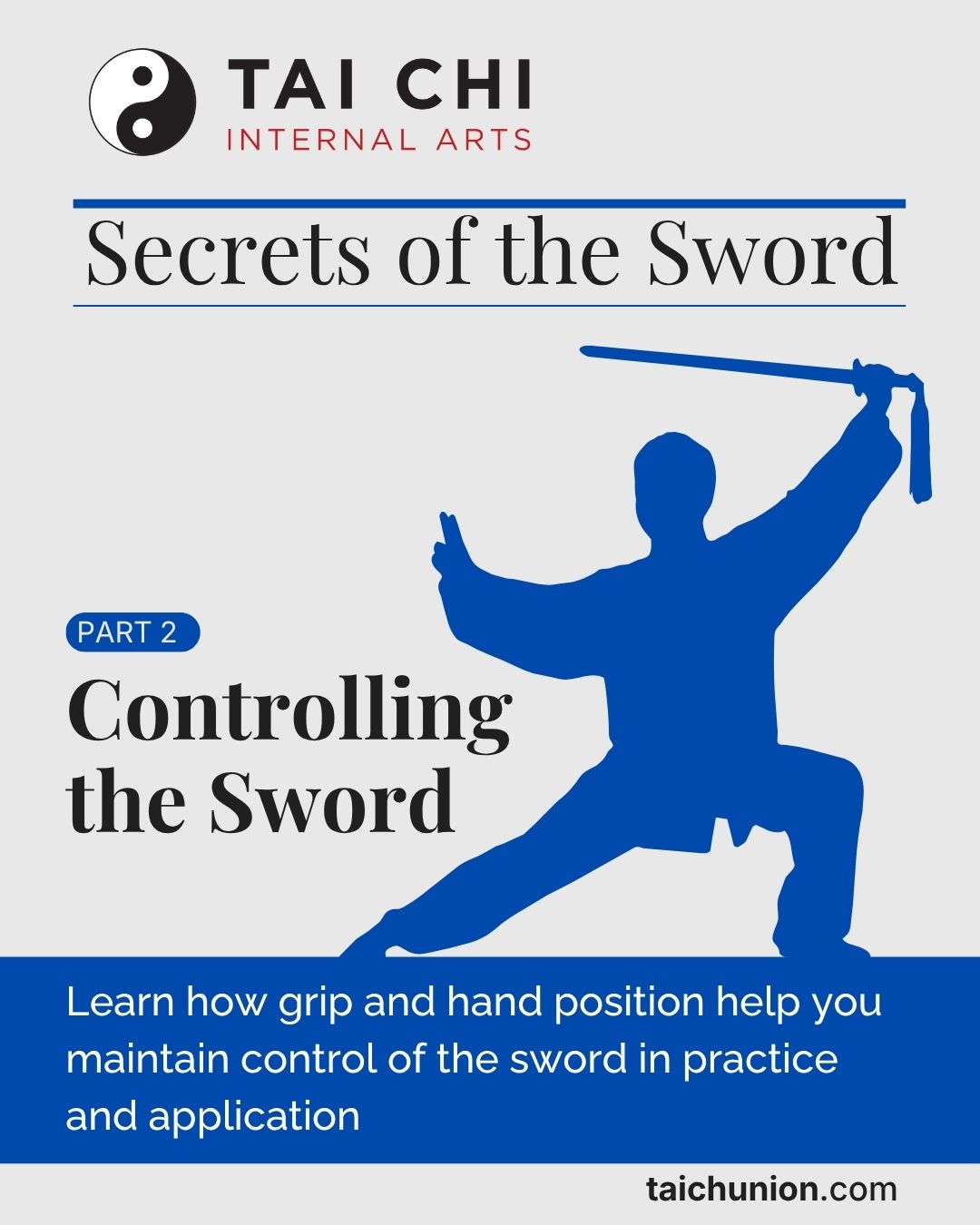
When sparring with an opponent, part of the skill involved lies in your ability to control your own weapon in order to have any chance of defending yourself against theirs, and a lot will depend on how you are holding your sword.
You may have seen people holding their sword with their hand wrapped around the guard, perhaps even placing their index finger on the blade itself in order to give better control. The best way to think about this is to consider that the guard is there for a reason. If you ask yourself: “What would happen if an opponent’s blade were to make contact with mine and slide along it until it made contact with the guard?” If the answer involves the loss of one or more of your fingers, then it’s probably not the best way for you to be holding your sword.
Ideally, a good, firm grip, though without too much tension, with all your fingers behind the guard, is recommended, and this needs to be reasonably close to the guard. There may also a case to be made for your index finger or knuckle applying pressure to the flat side of the guard at times, as long as it doesn’t overlap to the point where it is no longer protected from an incoming blade.
Teach tai chi? Get recognised.
Show students that your teaching has been independently assessed by the Tai Chi Internal Arts Union.
- Accredited Instructor status
- Instructor profile
- Professional support
APPLY NOW
If you are holding the sword some distance from the guard, especially if your hand is closer to the pommel than the guard, your sword is likely to flop around all over the place, which is not very helpful in the performance of a sequence, let alone in an actual fight where control, accuracy and timing are essentials for survival.
Your grip may relax a little when you are at a greater distance from your opponent, to avoid unnecessary tiring of your hand and arm, and there may be times when your index finger or outer finger slacken their grip a little to allow greater dexterity as your sword circles and whips around. However, the idea is to be in full control of your weapon at all times so that you can use it effectively and avoid having it batted or snatched from your hand.
Enjoy tai chi? Join the community.
Join fellow practitioners and get more from your interest in tai chi and the internal arts.
- Magazine and back issue archive
- Free T-shirt
- Members' community
EXPLORE MEMBERSHIP
With a jian, the extended index and middle fingers of your other hand can provide additional support to your sword hand, when appropriate, while at other times they can point away to balance the flow of Qi through your body, arms and weapon. This configuration of the fingers of the left hand, with the other two fingers curled inwards under the thumb, is called the “sword charm” or “sword talisman”.
With the dao, the free hand is normally open and free to grab, push or punch, as well as acting as a counterbalance for the sword arm in some of the movements. We will mention this later, but next week we will stay focused on the jian and we’ll begin by considering how a sword can be used as a shield, and some useful drills you might like to explore along the way.